


• The Idealist Critique of Idealism- Marx-Ambedkar-Periyar

    The Idealist Critique of Idealism- Marx-Ambedkar-Periyar

    The Young Hegelian Trap: Understanding the Philosophical Limitations of Contemporary Ambedkarite and Periyarist Movements

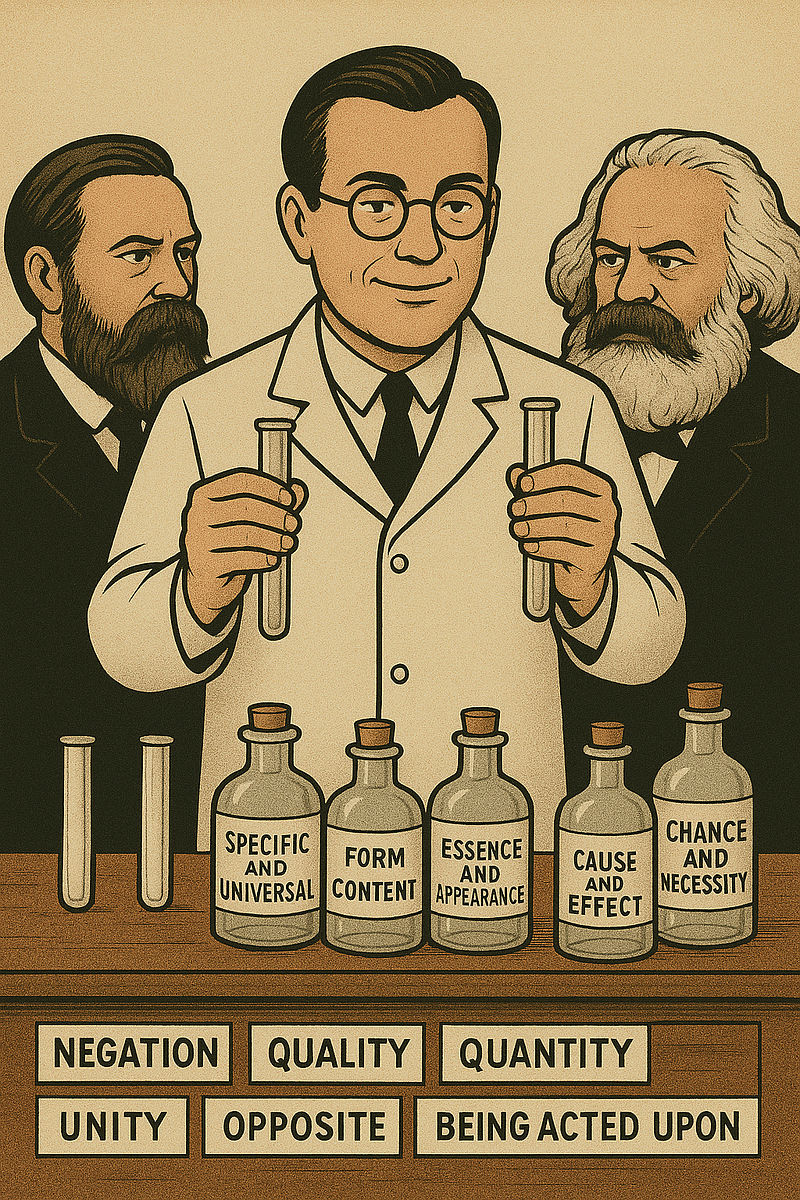
    The fundamental limitation that Marx and Engels identified in the Young Hegelians provides a precise theoretical framework for understanding both the historical role and contemporary stagnation of Ambedkarite and Periyarist movements in India. This parallel is not merely analogical but structural: both represent phases of ideological development that challenge dominant ideas while remaining trapped within the very idealist framework they purport to oppose.

    The Idealist Critique of Idealism

    The Young Hegelians — Feuerbach with his “religion of humanity,” Bauer with his atheism, Strauss with his historical criticism — focused their attack exclusively on religious consciousness while leaving untouched the material foundations of state power and private property. Similarly, Ambedkar and EVR mounted powerful critiques of Brahminical religion and caste ideology, yet their solutions remained largely within the realm of consciousness: conversion to Navayana Buddhism for Ambedkarites, Militant Atheism for Periyarists.

    Before proceeding, an important clarification: the Old Hegelians are not equivalent to Sanatani orthodoxy in any precise sense. This analogy, while useful pedagogically, should not be taken as exact mirroring. Not everything in Europe finds its parallel in India — the intellectual history of India is different because the economic history of India is different from Europe. The feudal-to-capitalist transition that shaped European philosophy unfolded differently in the colonial and post-colonial Indian context.

    Now,Applying the framework developed in The German Ideology to the Indian context reveals striking parallels:

    “The Old Hegelians (Sanatanis) had comprehended everything as soon as it was reduced to a Hegelian logical category (Vedic scriptures). The Young Hegelians (Ambedkarite and Periyarist) criticised everything by attributing to it religious conceptions or by pronouncing it a theological matter. The Young Hegelians (Ambedkarite and Periyarist) are in agreement with the Old Hegelians (Sanatanis) in their belief in the rule of religion, of concepts, of a universal principle in the existing world. Only, the one party attacks this dominion as usurpation, while the other extols it as legitimate.

    Since the Young Hegelians (Ambedkarite and Periyarist) consider conceptions, thoughts, ideas, in fact all the products of consciousness, to which they attribute an independent existence, as the real chains of men (just as the Old Hegelians (Sanatanis) declared them the true bonds of human society) it is evident that the Young Hegelians (Ambedkarite and Periyarist) have to fight only against these illusions of consciousness. Since, according to their fantasy, the relationships of men, all their doings, their chains and their limitations are products of their consciousness, the Young Hegelians (Ambedkarite and Periyarist) logically put to men the moral postulate of exchanging their present consciousness for human, critical or egoistic consciousness, and thus of removing their limitations. This demand to change consciousness amounts to a demand to interpret reality in another way, i.e. to recognise it by means of another interpretation.

    The Young-Hegelian (Ambedkarite and Periyarist) ideologists, in spite of their allegedly “world-shattering” statements, are the staunchest conservatives. This critique, while acknowledging the historical context of the founders, applies with full force to most of their contemporary adherents. The most recent of them have found the correct expression for their activity when they declare they are only fighting against “phrases.” They forget, however, that to these phrases they themselves are only opposing other phrases, and that they are in no way combating the real existing world when they are merely combating the phrases of this world. The only results which this philosophic criticism could achieve were a few (and at that thoroughly one-sided) elucidations of Christianity (Vedic religion) from the point of view of religious history; all the rest of their assertions are only further embellishments of their claim to have furnished, in these unimportant elucidations, discoveries of universal importance.

    It has not occurred to any one of these philosophers to inquire into the connection of German philosophy (Indian philosophy) with German reality (Indian reality), the relation of their criticism to their own material surroundings.”

    This is the crux: both the orthodox Brahminical order and its Ambedkarite-Periyarist critics agree that the fundamental problem is one of ideas — religious conceptions, cultural practices, consciousness itself. They differ only on which set of ideas should prevail, not on whether ideas themselves constitute the primary terrain of struggle.

    Applying this Marxist Critique ,we can identify three necessary consequences — logical outcomes inherent to their idealist foundations — that define the Ambedkarite and Periyarist movements:

    First: Misunderstanding the Material Base of Caste

    Ambedkarists and Periyarists fail to see cultural reality as a reflection of economic structures. They correctly identify caste as a cultural and ideological phenomenon but mistakenly treat it as an independent variable rather than as superstructure built upon a material base. Some even reverse the relationship, treating ideological structures (religion) as the foundation from which economic relations emerge.

    By attacking cultural elements like religious symbols and social customs while proposing alternate cultures like Navayana Buddhism or atheism — yet ignoring the economic foundation, the property relations and modes of production that require caste for their reproduction — their struggle resembles cutting weeds while leaving roots intact. They aim to change consciousness without changing the social being that determines it.

    Second: Misunderstanding the Class Character of the State

    Their engagement with the state is premised on the liberal illusion that it is a neutral arbiter capable of delivering social justice. They cannot comprehend that the state exists to preserve ruling class interests, and that in the Indian context, the perpetuation of caste consciousness is a primary means through which it achieves this goal.

    By dividing the working masses along caste lines, the state prevents the emergence of unified class consciousness and class action. A fight against caste is necessarily a fight against the state which strives hard to sustain the caste fissures. Seeing the state as a neutral spectator which has no role in this is a profound problem.

    Third: Becoming Controlled Opposition

    This combination of flaws makes these movements an ideal pet project for the ruling order. The state and the bourgeoisie actively incubate them as forms of controlled opposition. By funding, memorializing, and institutionalizing a politics that is vocally anti-Brahminical but functionally anti-revolutionary, they channel genuine anger into the safe confines of identity politics.

    This creates a pseudo-revolutionary, and ultimately counter-revolutionary, force that attacks the symptoms of caste (cultural discrimination) while protecting its material core (class exploitation). Radical phraseology provides the appearance of dissent while practice reinforces the status quo.

    Historical Conditioning vs. Contemporary Stagnation

    This limitation was historically conditioned. The class character of the Dravidian movement constrained Periyar’s reach, while Ambedkar’s engagement with the colonial and post-colonial state imposed practical boundaries on his radicalism. Within their historical context, their work represented genuine progress — the Gandhian Congress was progressive compared to existing society, and Ambedkarite and Periyarist movements were more progressive than the Gandhian Congress on social questions, though not as revolutionary as Marxists.

    However, what was historically conditioned limitation in the founders has become chosen stagnation in their followers. To remain at this “Young Hegelian” stage today — when productive forces have developed immensely and social contradictions have matured — constitutes intellectual regression. The excuse that “the founders couldn’t foresee the future” holds no validity for contemporary movements that refuse to analyze present material reality.

    The Necessary Dialectical Evolution

    A genuine progressive evolution of Ambedkar’s or Periyar’s thought should have reached Marxism by now, questioning property relations and the class nature of the state. This requires integrating insights about caste oppression within a materialist analysis that understands caste as embedded within and serving class exploitation.

    The alternative is perpetual stagnation: radical in appearance, conservative in essence — fighting phrases with phrases while the material world producing oppression continues unchanged.

    -to be continued-

  • The Great Health Insurance Heist

    The Great Health Insurance Heist

    The Great Health Insurance Heist: A Citizen’s Guide to the Scam You’re Already Paying For

    Politician: Thank you. My dear citizens, today is a historic day! We are launching “Aarogya Suraksha” – a scheme to provide free health insurance for all! No more worrying about medical bills. You can now walk into any empaneled private hospital and get top-quality treatment. Because, let’s be honest, our government hospitals are not as clean or modern as we would like. This is a new dawn!

    Citizen: That sounds fantastic, sir. So, this insurance – how much will it cost me?

    Politician: Not a single rupee! It is absolutely free for you. The government will pay your premium. Health insurance is a pillar of financial prudence, and we are making it accessible to everyone.

    Citizen: I see. So, you, personally, will pay for me?

    Politician: No, no. From the state treasury. The people’s money for the people’s welfare!

    Citizen: And this treasury money… you will give it to this gentleman’s insurance company?

    Insurance Owner: That is correct. We are the risk managers. We will pool the premiums and ensure the scheme runs smoothly.

    Citizen: For everyone in the country? That’s a lot of premiums. But sir, you are a business. After you pay out all the hospital claims, and after your office costs, salaries, and advertising… you need to make a profit, right? That’s why you’re in business.

    Insurance Owner: That is a fundamental principle of commerce. We provide a valuable service, and a reasonable profit is our reward for efficiency and capital investment.

    Citizen: Understood. So, when I’m sick, this “claim money” you get from the government… you will hand it over to me?

    Bureaucrat: No. The model is cashless. The payment is made directly to the healthcare provider upon completion of treatment. The beneficiary does not handle funds.

    Citizen: So, you will treat me for free?

    Hospital Owner: Absolutely. The insurance will cover everything. You just need your Aadhaar card.

    Citizen: But why would you do that? You’re also a business. After you pay for the doctors, the medicines, the equipment… you also need to make a profit.

    Hospital Owner: Naturally. A margin is essential for growth, innovation, and maintaining our world-class facilities. The treatment is free for you, but the system sustains itself.

    Citizen: It’s all becoming clear. So, the government takes tax money, gives it to the insurance company, which takes a profit, who then pays the hospital, which also takes a profit. Two layers of profit, all from the public treasury.

    Politician: You are missing the point! The point is service delivery! The point is that the citizen gets treatment!

    Citizen: My question is, why are these specific companies chosen? How do we know they are the best?

    Politician: They are renowned, trusted partners! Furthermore, they are strong believers in our nation’s development… They even contribute to the democratic process…

    Citizen: They fund your election campaigns?

    Politician: They make lawful donations to the political process, which is the lifeblood of any democracy! We need funds to reach the people, to tell them about our good work like this scheme!

    Citizen: Which brings me to my final point. The government is always short of money. Where will you find the billions needed for this?

    Bureaucrat: The allocation will be re-prioritized. Inefficient and redundant expenditures will be rationalized. The budget for the Public Health Infrastructure mission is being scaled down, as the new scheme will ultimately reduce the burden on it.

    Citizen: Let me get this straight. The government will cut funding for public hospitals and use that money to fund this new scheme.

    Let’s be clear about what we are evolving from. Ideally, the system should be simple and efficient:
    Our Taxes= Healthcare in Public Hospitals.

    But we all know the old reality. It was:
    Our Taxes= Healthcare + Corruption.

    It was a leaky bucket. But now, you haven’t fixed the leaks. You have created a whole new, more expensive bucket, and you’ve made the leaks a formal part of the design! You have evolved corruption into a legal, institutionalized system.

    Now, the formula is:
    Our Taxes= Insurance Company Profit + Hospital Profit + Politician’s Private Loot + Your Election Fund + Insurance Running Expenses + Actual Medical Care.

    This isn’t progress. This is corruption 2.0. You’ve replaced small, under-the-table bribes with massive, on-the-books profits for your partners, funded entirely by the public. You didn’t stop the theft; you just wrote a law to justify it.

    Politician: This is slander! A gross oversimplification of a complex policy!

    Citizen: The math is simple. You haven’t eliminated corruption. You’ve just privatized it and made the taxpayer pay a premium for it. What a brilliant scam.
    My apologies.I meant to say scheme.

  • Moral depreciation of Marx -I

    Moral depreciation of Marx -I

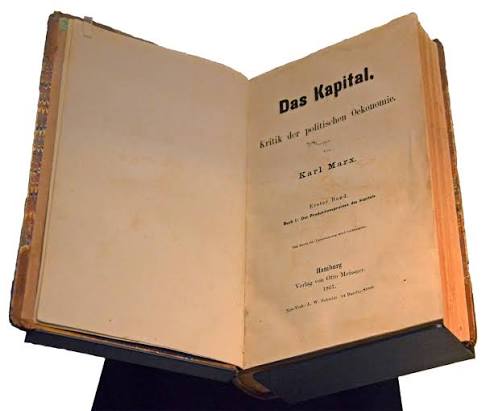
    But in addition to the material wear and tear, a machine also undergoes, what we may call a moral depreciation. It loses exchange-value, either by machines of the same sort being produced cheaper than it, or by better machines entering into competition with it. In both cases, be the machine ever so young and full of life, its value is no longer determined by the labour actually materialised in it, but by the labour-time requisite to reproduce either it or the better machine. It has, therefore, lost value more or less.” — Marx

    With this concept of “moral depreciation,” Marx identifies a crucial vulnerability in capital: its value is not fixed but is subject to erosion from technological progress and competition. This occurs not through physical use, but because the same or a better machine can now be produced at a lower cost. Consequently, the value of any existing machine is set not by the historical labor invested in it, but by the current, socially necessary labor time required to reproduce it. The underlying principle is that value is determined by the cost of (re)production, not the original cost.

    This principle extends beyond machinery to other forms of capital. For commodity capital, consider a company that has produced a good for X rupees and placed it on a supermarket shelf. If a competitor then brings an identical product to market for X-Y rupees, the first company is forced to devalue its stock and sell at the new, lower price. Its capital is morally depreciated by the cheaper reproduction of the same commodity.

    On an international scale, this becomes a powerful driver of global economic dynamics. When one nation innovates and systematically lowers the cost of production, it devalues the industrial capital of its competitors. The factories and technologies of other countries become economically obsolete, not because they are worn out, but because the global benchmark for “socially necessary labor time” has fallen. This makes national investments in education, infrastructure, and efficient policy a race to achieve competitive advantage by imposing moral depreciation on rivals, while factors like corruption or wasteful spending accelerate a nation’s own vulnerability.

    This dynamic is starkly illustrated by China’s focused strategy. Through state planning, it has drastically reduced the socially necessary labor time for countless goods, thereby imposing massive moral depreciation on the industrial capital of the US and other Western nations. Their manufacturing assets, even if physically intact, were devalued by more efficient global competitors.

    This phenomenon, however, is not new. Its historical precedent was set when English traders, armed with superior technology for cloth production, entered the Indian market. By producing cloth more cheaply, they morally depreciated the manufacturing capital of Indian weavers, demonstrating that the devaluation of capital through competition is a foundational and enduring feature of capitalist development.

    The contemporary example,

    OpenAI spent an estimated $10-$15 billion in capital, largely from Microsoft, to build and scale its AI engines like GPT-4. This cost covered the immense computational power and extensive research required to pioneer the technology. In contrast, DeepSeek created a comparable machine, DeepSeek-V2, for a fraction of that cost. Industry analysis suggests their development and training costs were likely in the hundreds of millions of dollars, not billions. This drastic reduction in the cost of production has morally depreciated the value of OpenAI’s original capital. The societal cost to reproduce a state-of-the-art AI is now far lower, meaning the financial value of OpenAI’s initial multi-billion dollar investment has been significantly reduced by this new, more efficient competition.

    -to be continued-