Category: philosophy

  • Moral depreciation of Marx -I

    Moral depreciation of Marx -I

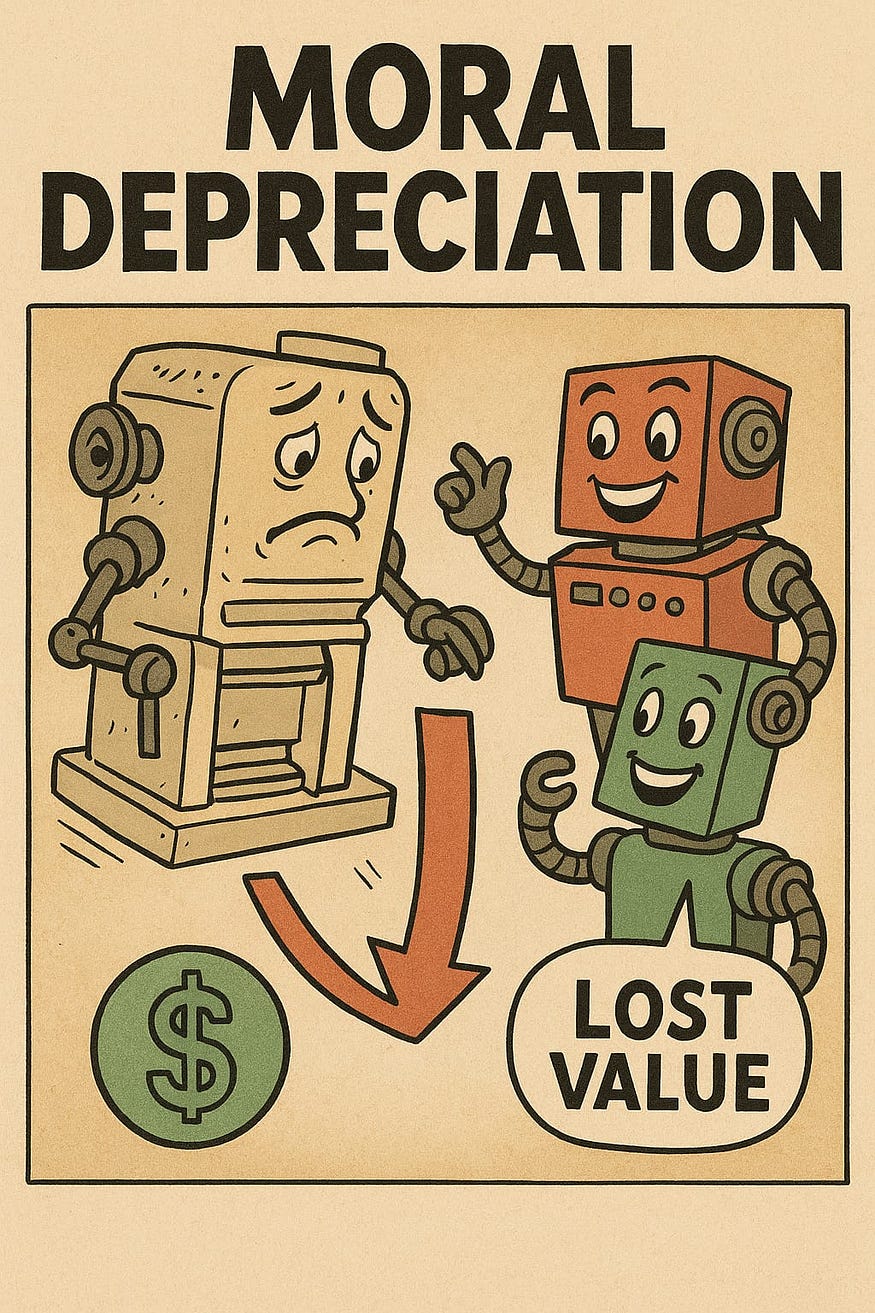
    But in addition to the material wear and tear, a machine also undergoes, what we may call a moral depreciation. It loses exchange-value, either by machines of the same sort being produced cheaper than it, or by better machines entering into competition with it. In both cases, be the machine ever so young and full of life, its value is no longer determined by the labour actually materialised in it, but by the labour-time requisite to reproduce either it or the better machine. It has, therefore, lost value more or less.” — Marx

    With this concept of “moral depreciation,” Marx identifies a crucial vulnerability in capital: its value is not fixed but is subject to erosion from technological progress and competition. This occurs not through physical use, but because the same or a better machine can now be produced at a lower cost. Consequently, the value of any existing machine is set not by the historical labor invested in it, but by the current, socially necessary labor time required to reproduce it. The underlying principle is that value is determined by the cost of (re)production, not the original cost.

    This principle extends beyond machinery to other forms of capital. For commodity capital, consider a company that has produced a good for X rupees and placed it on a supermarket shelf. If a competitor then brings an identical product to market for X-Y rupees, the first company is forced to devalue its stock and sell at the new, lower price. Its capital is morally depreciated by the cheaper reproduction of the same commodity.

    On an international scale, this becomes a powerful driver of global economic dynamics. When one nation innovates and systematically lowers the cost of production, it devalues the industrial capital of its competitors. The factories and technologies of other countries become economically obsolete, not because they are worn out, but because the global benchmark for “socially necessary labor time” has fallen. This makes national investments in education, infrastructure, and efficient policy a race to achieve competitive advantage by imposing moral depreciation on rivals, while factors like corruption or wasteful spending accelerate a nation’s own vulnerability.

    This dynamic is starkly illustrated by China’s focused strategy. Through state planning, it has drastically reduced the socially necessary labor time for countless goods, thereby imposing massive moral depreciation on the industrial capital of the US and other Western nations. Their manufacturing assets, even if physically intact, were devalued by more efficient global competitors.

    This phenomenon, however, is not new. Its historical precedent was set when English traders, armed with superior technology for cloth production, entered the Indian market. By producing cloth more cheaply, they morally depreciated the manufacturing capital of Indian weavers, demonstrating that the devaluation of capital through competition is a foundational and enduring feature of capitalist development.

    The contemporary example,

    OpenAI spent an estimated $10-$15 billion in capital, largely from Microsoft, to build and scale its AI engines like GPT-4. This cost covered the immense computational power and extensive research required to pioneer the technology. In contrast, DeepSeek created a comparable machine, DeepSeek-V2, for a fraction of that cost. Industry analysis suggests their development and training costs were likely in the hundreds of millions of dollars, not billions. This drastic reduction in the cost of production has morally depreciated the value of OpenAI’s original capital. The societal cost to reproduce a state-of-the-art AI is now far lower, meaning the financial value of OpenAI’s initial multi-billion dollar investment has been significantly reduced by this new, more efficient competition.

    -to be continued-

  • அறுதி ஆய்வு பற்றிய மாயை

    அறுதி ஆய்வு பற்றிய மாயை

    ஏதோ ஒரு ஆய்வு செய்யாமல் விட்டதால்தான் இந்தியாவில் புரட்சி வரவில்லை —
    எனவே, இந்திய கம்யூனிஸ்டுகள் அனைவரும் சேர்ந்து ஒரு பெரிய ஆய்வு செய்து,
    அந்த “ரகசிய கோட்பாட்டை” கண்டுபிடித்துவிட்டால் நாம் புரட்சியை நடத்திவிடலாம் —
    என்று பேசுவது ML குழுக்கள் இடையே இன்று ஒரு டிரெண்ட் ஆகிவிட்டது.

    ஆனால் ஒரு சமூகத்தைப் பற்றிய ஆய்வு என்றுமே இறுதியானது அல்ல.
    மற்ற எல்லா சமூகங்களையும் போலவே, இந்திய சமூகம் மாறிக்கொண்டே இருக்கிறது.
    அதனால் 1950-களுக்குப் பொருத்தமான ஒரு ஆய்வு, 2025-ல் இயல்பாகவே காலாவதியாகிவிடும்.

    1950 பற்றிய ஒரு ஆய்வு, 1950-ல் ஒரு மாதிரியாக இருக்கும்;
    1960-ல் வேறு மாதிரியாகும்; 2025-ல் இன்னொரு மாதிரியாக இருக்கும்.
    அதுதான் இயக்கவியல் — Dialectics.

    ஒரு முடிவான, குறையற்ற ஆய்வை தந்துவிட முடியும் என்று நம்புவது,
    இயக்கவியலுக்கே எதிரானது.
    அது ஒரு இயக்க மறுப்பியல் (metaphysics) —
    ஏனெனில் எந்த ஆய்வும் ஒரு குறிப்பிட்ட காலத்திற்கும் சூழலிற்கும் உட்பட்டது.

    அதிலிருந்து மீண்டு வெளி நிற்கும் “நித்திய உண்மை” என்று ஒன்றே இல்லை.
    சமூகம் மாறிக்கொண்டிருக்கும் வரை, ஆய்வுகளும் மாறிக்கொண்டே இருக்க வேண்டும்.
    ஒரு ஆய்வு “நிலைத்தது” என்று நம்புவது,
    உண்மையில் இயக்கத்தை மறுப்பதற்குச் சமம்.

    அதேபோல், புறச் சூழல்களை கருத்தில் கொள்ளாமல்,
    ஒரு கோட்பாடு அல்லது தத்துவம் தன்னிச்சையாக புரட்சியை உருவாக்கிவிடும்
    என்று நம்புவது கருத்துமுதல்வாதம் (Idealism) ஆகும்.

    மார்க்ஸும் எங்கல்சும் வலியுறுத்தியபடி,
    பொருளாதார அடித்தளத்தின் மாற்றமே சிந்தனை, கோட்பாடு, தத்துவங்களை உருவாக்குகிறது.
    கோட்பாடுகள் புரட்சியை உருவாக்குவதில்லை;
    புரட்சியின் இயக்கங்களே கோட்பாடுகளுக்கு புதிய பொருளை அளிக்கின்றன.

    ஆய்வின் தொடர்ச்சி மற்றும் Dialectical முன்னேற்றம்

    இந்திய கம்யூனிஸ்டுகள் அந்தந்த காலத்திலும், அந்தந்த சூழல்களிலும்
    ஆய்வுகளை செய்து வந்தே இருக்கிறார்கள் —
    அவற்றில் குறைகள் இருப்பது இயல்பு, ஏனெனில்
    அந்தக் காலத்தின் பொருளாதார மற்றும் அரசியல் நிபந்தனைகளே அவற்றை நிர்ணயித்தன.

    1950-களின் கம்யூனிஸ்டுகளின் ஆய்வை இன்று எடுத்து,
    அதில் சில எழுத்துப் பிழைகள் இருப்பதாகச் சொல்லி,
    அந்த ஆய்வுகள் “தவறானவை” என்று கூறுவது விதண்டாவாதம் (Sophistry) தான்.

    அதே போல, காலந்தோறும் புதிய ஆய்வுகள் தொடர்ந்து வந்து கொண்டே இருக்கின்றன.
    ஒவ்வொரு புதிய ஆய்வும், முந்தையதைவிட சிறந்த புரிதலை கொடுத்தால்,
    அந்த புது ஆய்வு மேம்பட்டது என்று சொல்லலாம் — அதுவே Dialectics.

    வெறுமனே, இருக்கும் ஆய்வில் ஒரு குறையைச் சொல்லிவிடுவது
    அறிவியல் விமர்சனம் அல்ல — அது வெறும் விதண்டாவாதம்.

    ஒரு மார்க்சியவாதி செய்யும் எந்த ஆய்வும் அரை-குறையாகத்தான் இருக்கும் என்பது அவர் அறிந்து இருக்கிறார்.
    ஏனெனில் அவர் அறிந்திருக்கிறார் —
    முழு, நித்திய உண்மையை ஒரே நேரத்தில் பிடிக்க முடியாது என்பதை.
    அதனால் ஒரு உண்மையை “நித்தியமாகக் கண்டறிந்தேன்” என்று
    மார்க்சியவாதி பிதற்ற மாட்டான்.

    காலப்போக்கில், நடைமுறையின் வழியே தான் புரிதலை மேம்படுத்திக்கொண்டு,
    கட்சி கட்டி, மக்கள் இயக்கங்களில் கலந்து கொண்டு,
    அறிவும் அனுபவமும் ஒன்றாக வளர்வதே
    மார்க்சியவாதியின் தத்துவமும் நடைமுறையும்.

    ஆனால் இதை விடுத்து, சில ML குழுக்கள் மற்றும்
    “திண்ணை மார்க்சிய வீரர்கள்” (verandah revolutionaries)
    அந்த ஒரு புனித கோட்பாட்டுக்காக காத்துக்கொண்டு இருக்கிறார்கள்.
    லெனின் மீண்டும் வந்து வழி காட்டுவாரோ என்ற எதிர்பார்ப்பில்
    காத்திருக்கிறார்கள். முழுமையான- ரகசியமான- புனித கோட்பாட்டை கண்டு பிடித்த உடன் களத்திற்கு வருவார்கள் என்று நம்புவோம்.

    இப்போது நடைமுறையில் எந்தக் களப் பணியும் இல்லாததால்,
    இந்த வெட்டி வியாக்கியானம் (empty theorizing) செய்ய
    அவர்களுக்கு நேரம் மிகுதியாகவே இருக்கிறது.

    முடிவாக

    ஆய்வு என்பது புரட்சிக்கு முன்னேற்பாடல்ல —
    அது புரட்சியின் இயக்கத்தை புரிந்துகொள்ளும் கருவி.
    ஆய்வு முடிவற்றது, ஏனெனில் சமூகம் இயக்கமுடையது.
    ஒரு காலத்தின் உண்மை, அடுத்த காலத்தின் பொய்யாக மாறலாம் —
    அதுதான் இயக்கவியலின் உண்மை.

    எனவே, “முடிவான கோட்பாட்டைத் தேடும்” நம்பிக்கை
    அறிவியலல்ல — அது இயக்க மறுப்பியல்,
    மற்றும் மார்க்சிய தத்துவத்தின் அடிப்படைக்கு எதிரானது.

    இந்தியாவில் கம்யூனிஸ்டுகள் ஆய்வே செய்யவில்லை என்று சொல்வதெல்லாம், இந்திய கம்யூனிஸ்ட் இயக்கத்தின் மீதான அவதூறு பரப்புதல் அன்றி வேறில்லை.

  • The Dialectics between Base structure and Superstructure

    The Dialectics between Base structure and Superstructure

    Society is never static. It is always in motion, though the speed of change may vary. At times, it may even appear still—but just as a screenshot cannot prove that a movie is motionless, a seemingly unchanging society is also in motion beneath the surface.

    The caste system, for instance, though popularly portrayed as static, is not immutable. It has been evolving and changing in correspondence with shifts in material conditions and relations of production. It is true that the material conditions of life determine the consciousness of society. Yet, this does not mean that social consciousness or the superstructure mirrors the material base exactly.

    The present is a continuous dialectics between the past and the future. The past superstructure and the past base structure still have their bearings in the present. A section of society strives hard to restore or preserve the past, while another section dreams of and struggles for a progressive future.

    The social consciousness and superstructural elements inherited from the past do not vanish overnight. As Marx noted, humanity must consciously struggle against them. Both the remnants of the old base and the old superstructure still exert influence over the present. Within society, some groups strive to restore or preserve elements of the past, while others envision and fight for a progressive future.

    The development of the productive forces propels change in the material base, while the superstructure follows—but often with a lag. This lag may persist due to the absence or slackness of conscious reform movements among the working class, or conversely, due to the deliberate efforts of the ruling class to maintain the old social order—or at least its cultural remnants.

    The base structure influences the superstructure (b → s), and the superstructure, in turn, influences the base (s → b). But the extent and direction of this mutual influence determine whether society advances or stagnates. Suppose we have a base structure b₁ and a corresponding superstructure s₁. The base b₁ creates and sustains s₁, while s₁ justifies and reinforces b₁. If the forces of influence are perfectly balanced—if s₂b = b₂s—then no real social change would ever occur.

    When the base begins to transform—when b₁ moves toward a new form b₂—the existing superstructure s₁ tends to resist, pulling society back toward the old b₁. Likewise, when the superstructure begins to transform—when s₁ moves toward a new form s₂—the existing base structure b₁ resists, attempting to restore the earlier balance.

    For genuine social transformation to occur, one of these forces must become dominant. Either the development of the base must overpower the inertia of the superstructure, or a revolutionary transformation in social consciousness must consciously act to accelerate and consolidate the change in the base. Only then does the dialectic move forward.

    -to be continued-